Initial Assessment and Introduction
Debating whether to book an initial assessment? Want to learn more about how physiotherapy may benefit your animal?
Pop us a message and we will be happy to have a chat with you about how we can best support you and your animal!
What this service includes
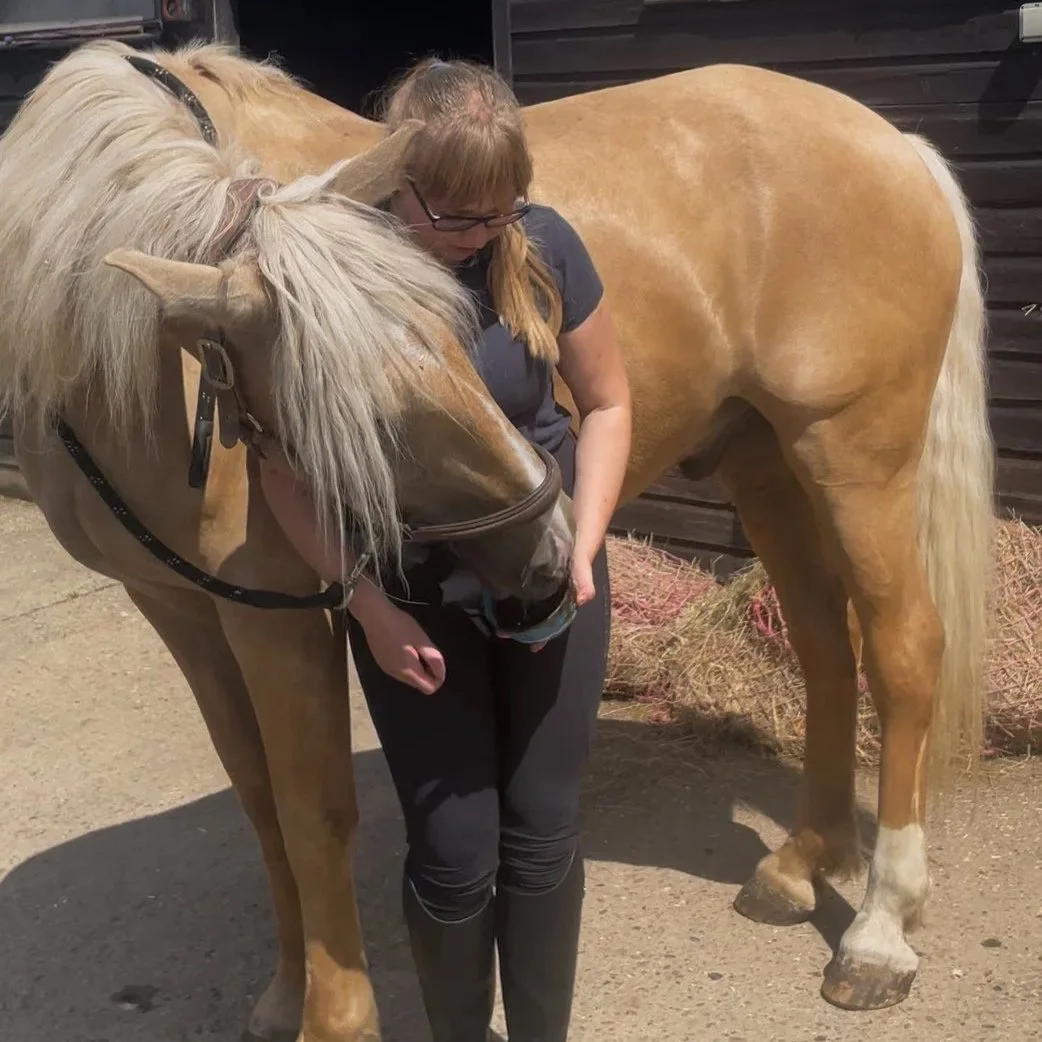
Designed for new clients, initial assessment and introduction sessions allow the animal to become acquainted with us, before we perform a full head-to-toe assessment and discuss a suitable treatment plan with you.
Initial assessments are always tailored to your animal, ensuring we work through at their own pace and adapt our techniques to best suit their needs. Having said this, most of our initial assessments will follow the below structure:
-
This begins long before the scheduled appointment time, as we ask all new clients to fill out an onboarding form detailing past injuries, ailments and the reason for treatment. This allows us to arrange obtaining veterinary consent if needed prior to the appointment, and also to prepare adequately to meet your animal. At the start of the session, we will revisit some of this information and discuss in more detail the underlying pathologies and how physiotherapy can provide support. We will also use this discussion time to begin to introduce ourselves to your animal and ensure they are comfortable with our presence before commencing any hands on work.
-
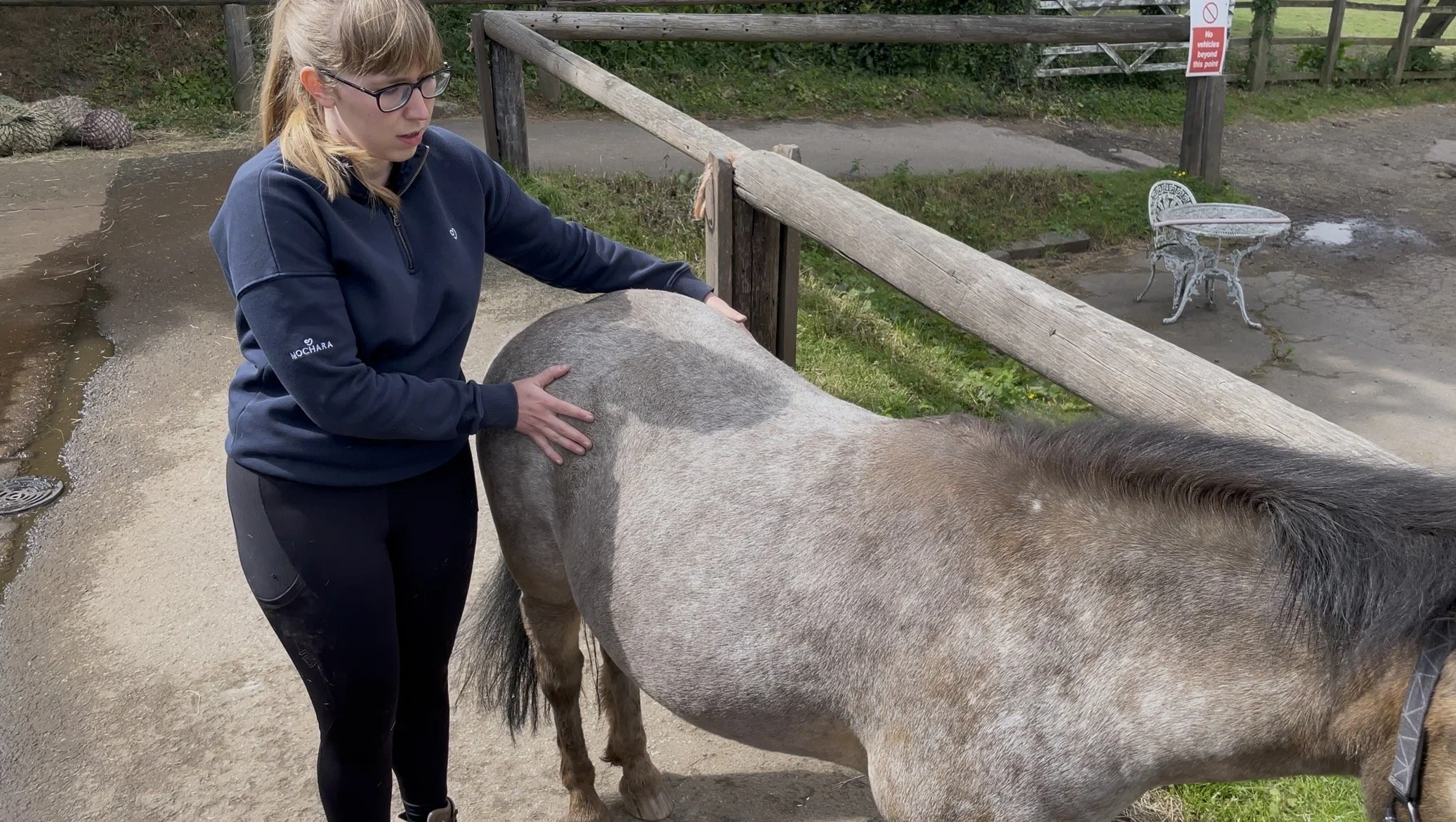
Static assessments involve observing the posture and conformation of your animal from all angles. This can give us valuable information on areas of weakness and compensatory adaptations. We also like to take pictures at this stage so we can visualise progress over time.
-
One of the most important parts of the assessment, we will ask to watch your animal move. This allows us to identify asymmetries, compensations and balance that tell the tale of what is happening musculoskeletally. Through physiotherapy treatment, we aim to address these adaptations to help your animal move freely.
-
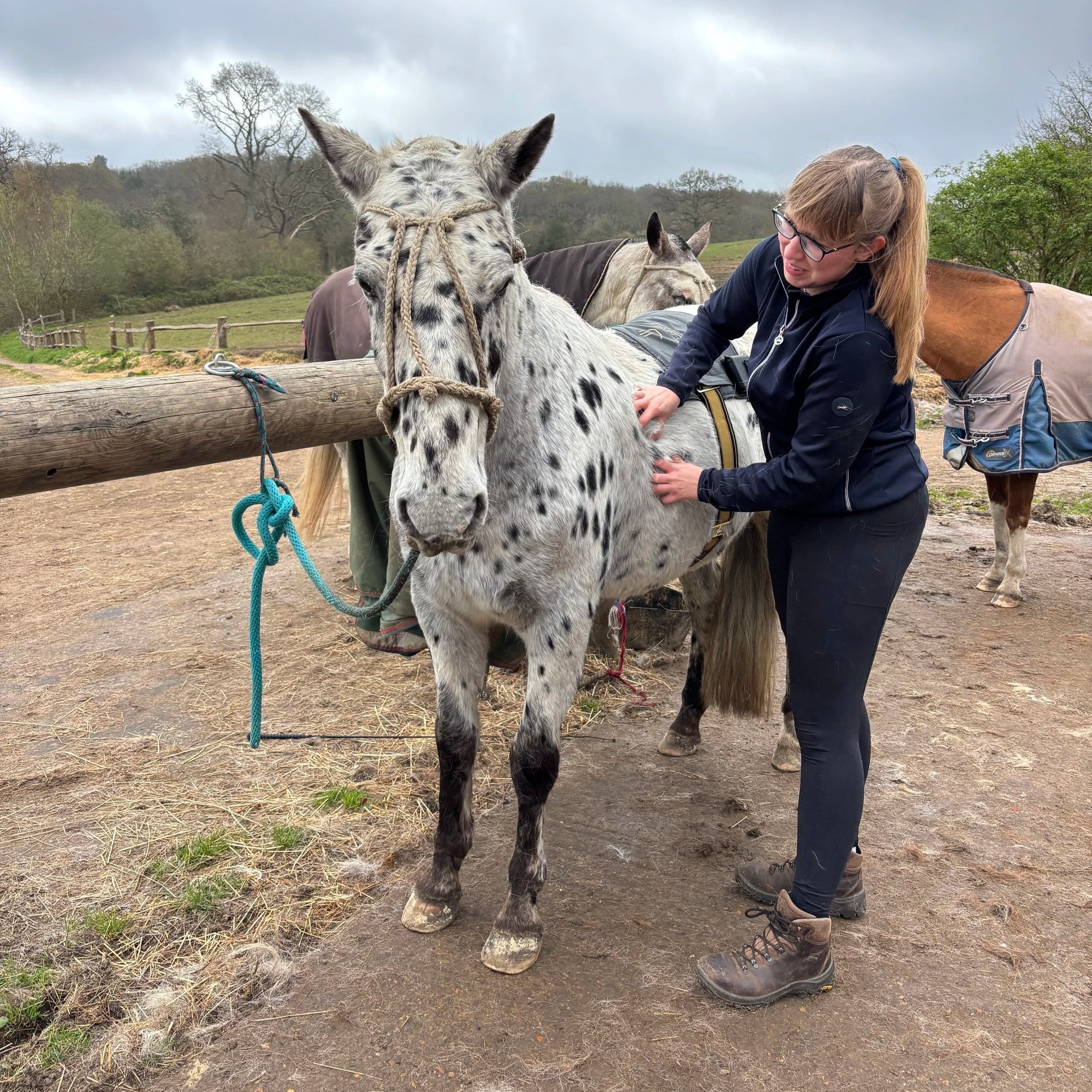
At this point we start to get hands on, feeling all over the body to assess soft tissue structures. We use the 4 T’s approach: tone, texture, tenderness and temperature to ensure a holistic evaluation of what the tissues are telling us. During the palpation, we keep a close eye on the animal’s behaviour to further identify areas of discomfort for us to focus our treatment on.
-
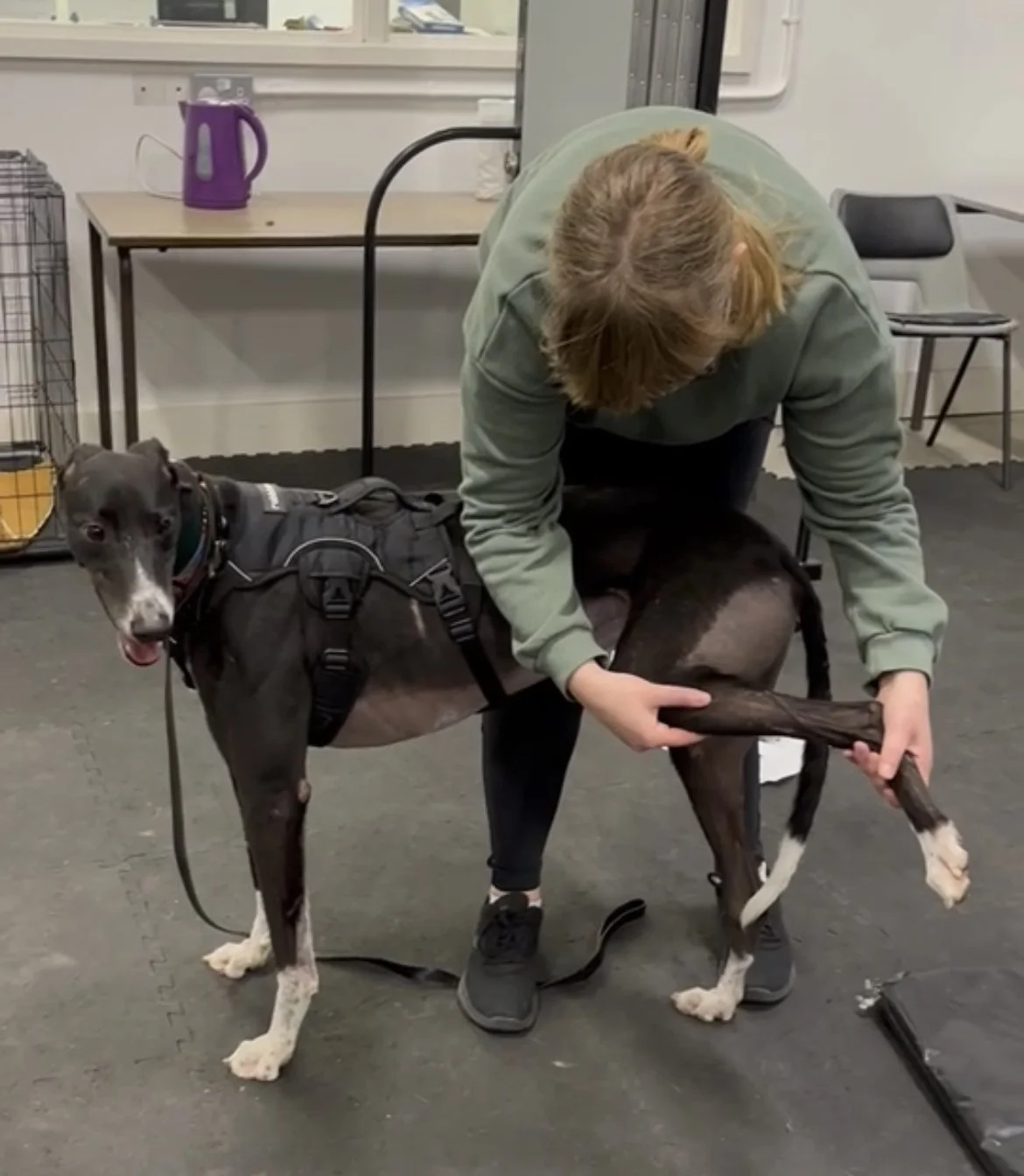
Used to assess joints, range of motion involves lifting and moving the limbs to take each joints through the normal planes of movement. Here we are assessing for restrictions (bony and soft tissue) that are causing limitations to normal movement, as well as heat or crepitus that could suggest bony changes within the joint.
-
These elements of the initial assessment are included as and when required, depending on how the case is presenting. Spinal exams include assessing the movement of each vertebra and the pelvis to identify areas where movement may be blocked. Neurological assessments involve a variety of tests to monitor the speed of reactions to different stimuli and identify neural deficits.
-
After completing a full assessment, we will take a moment to discuss our findings with you and give our suggestions for treatment options. We will begin some gentle treatment, addressing the areas highlighted by the assessment. For a detailed overview of how we conduct our treatment, please view the follow-up physio treatments page for a breakdown of the modalities we offer.
-
The support doesn’t end when the session is over. After the appointment, we will take the time to write up a detailed document breaking down our assessment into the individual sections, using images to help describe what we found. This will be sent to your email for you to view in your own time, alongside a handful of suggested exercises for you to add in to your animals routine. In addition, we are always at the end of the phone with WhatsApp support should you have any questions or concerns in between appointments.
Before your session, read our handy guides below on how to prepare your animal. These contain important information you can do ahead of the physiotherapy session to ensure the treatment runs smoothly and is as effective as possible.